Takefu Knife Village: The Workshop, the Museum, and How to Get There
Short answer: Takefu Knife Village is a group of blacksmith workshops in Echizen City, Fukui, where you can watch Echizen knives being made from a viewing walkway, learn their history in a small museum, and buy knives from many local makers in one shop. Admission is free. It is a short taxi ride from Echizen-Takefu Station on the Hokuriku Shinkansen, but taxis don’t always wait at the station, so plan the ride before you go (details at the end). Go on a weekday if you want to see craftsmen at work.
We visited on a Sunday in November 2026. This guide covers what we actually saw, in the order you’ll see it: the village and its shop, the museum and the viewing workshop, and then how to get there from the station.
Takefu Knife Village
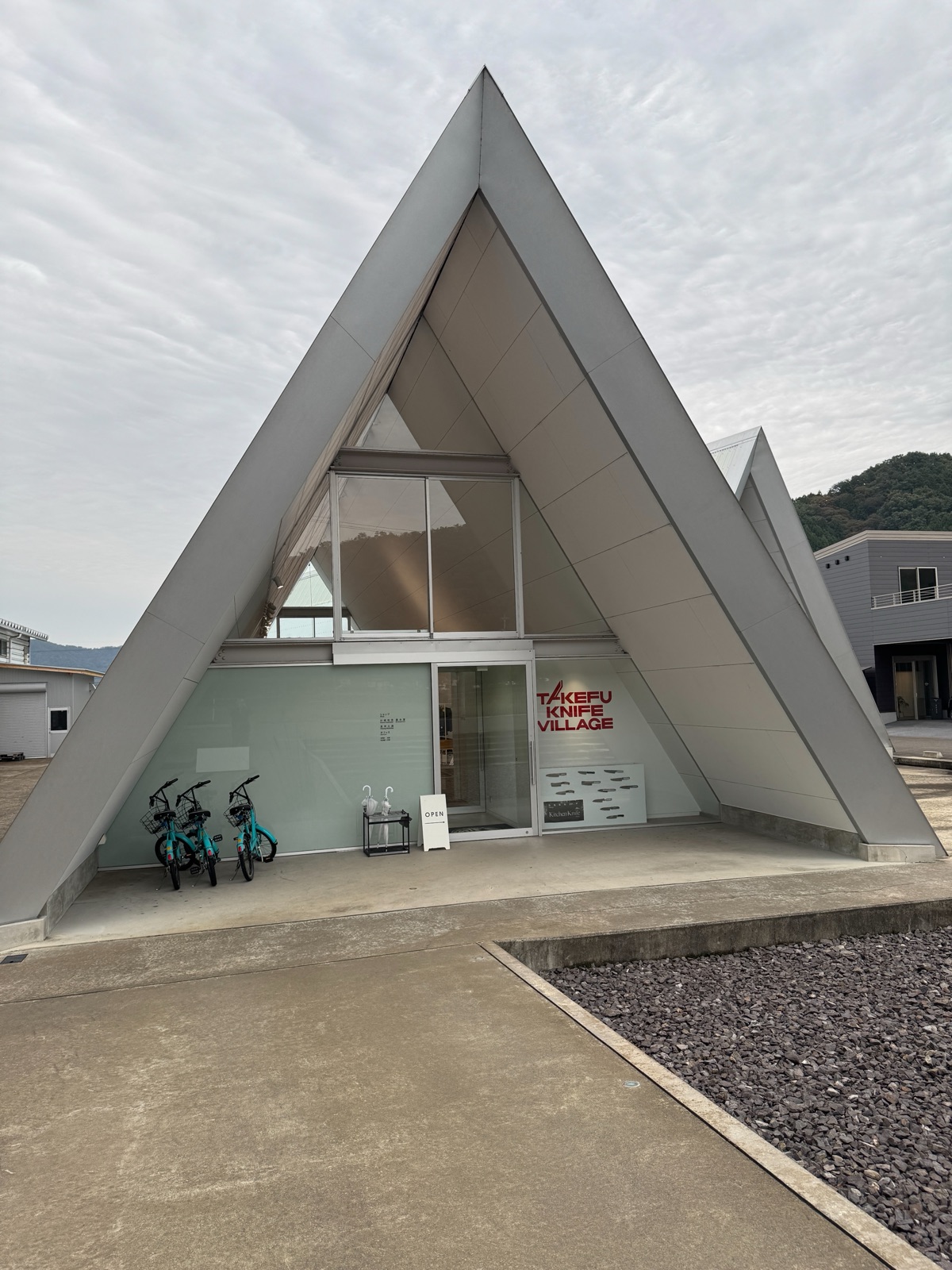
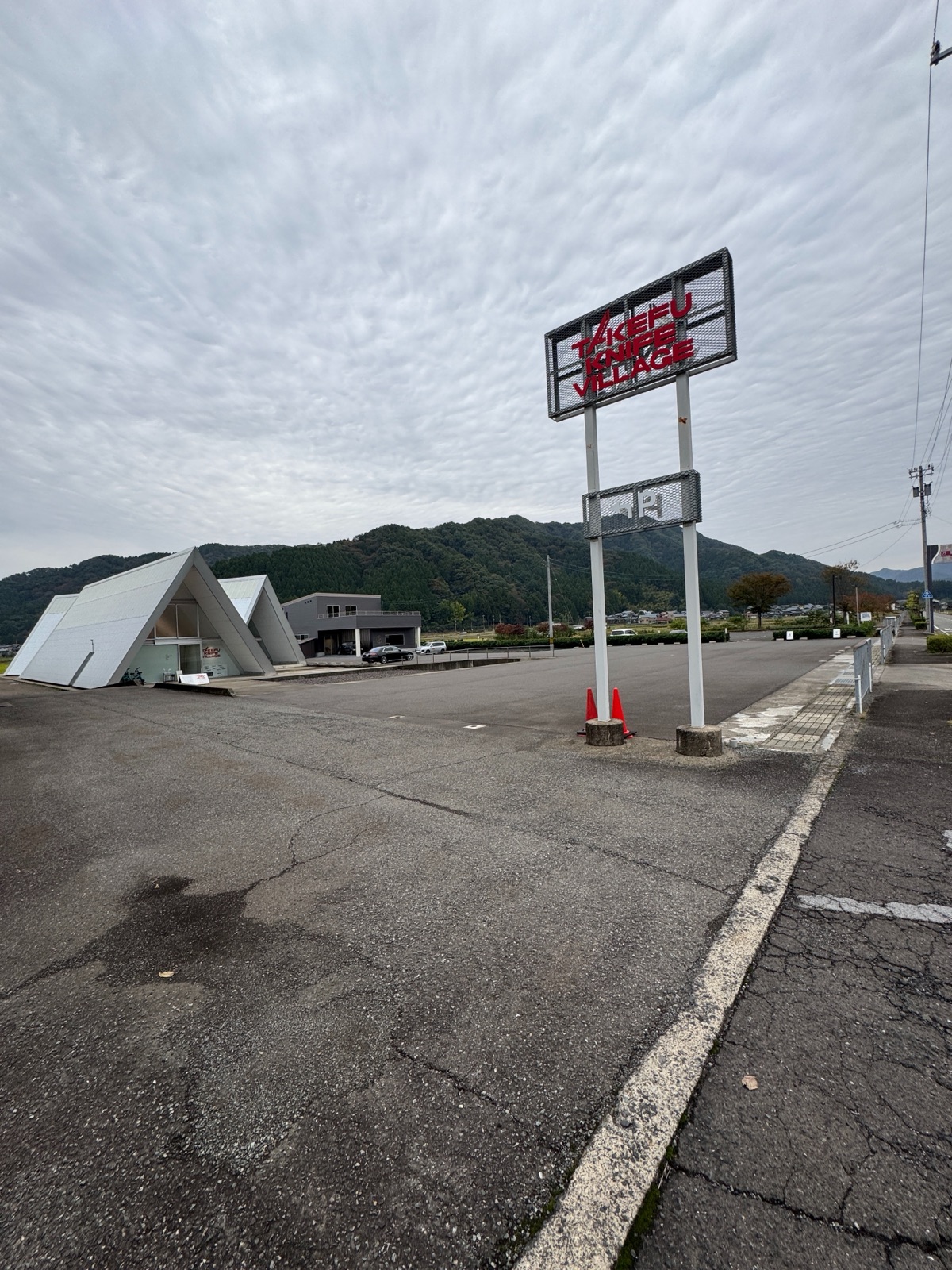
The village sits among rice fields and low hills, with a large parking lot in front. You will recognize it by the two tall triangular buildings with glass fronts and the red “TAKEFU KNIFE VILLAGE” sign.
According to the village’s own brochure, Takefu Knife Village was completed in May 1993 by a cooperative of ten Echizen knife makers, who opened their shared workshop to the public. It has since grown to more than 40 craftsmen, ranging from teenagers to people in their 80s, and a new building with a viewing workshop was added in August 2020.
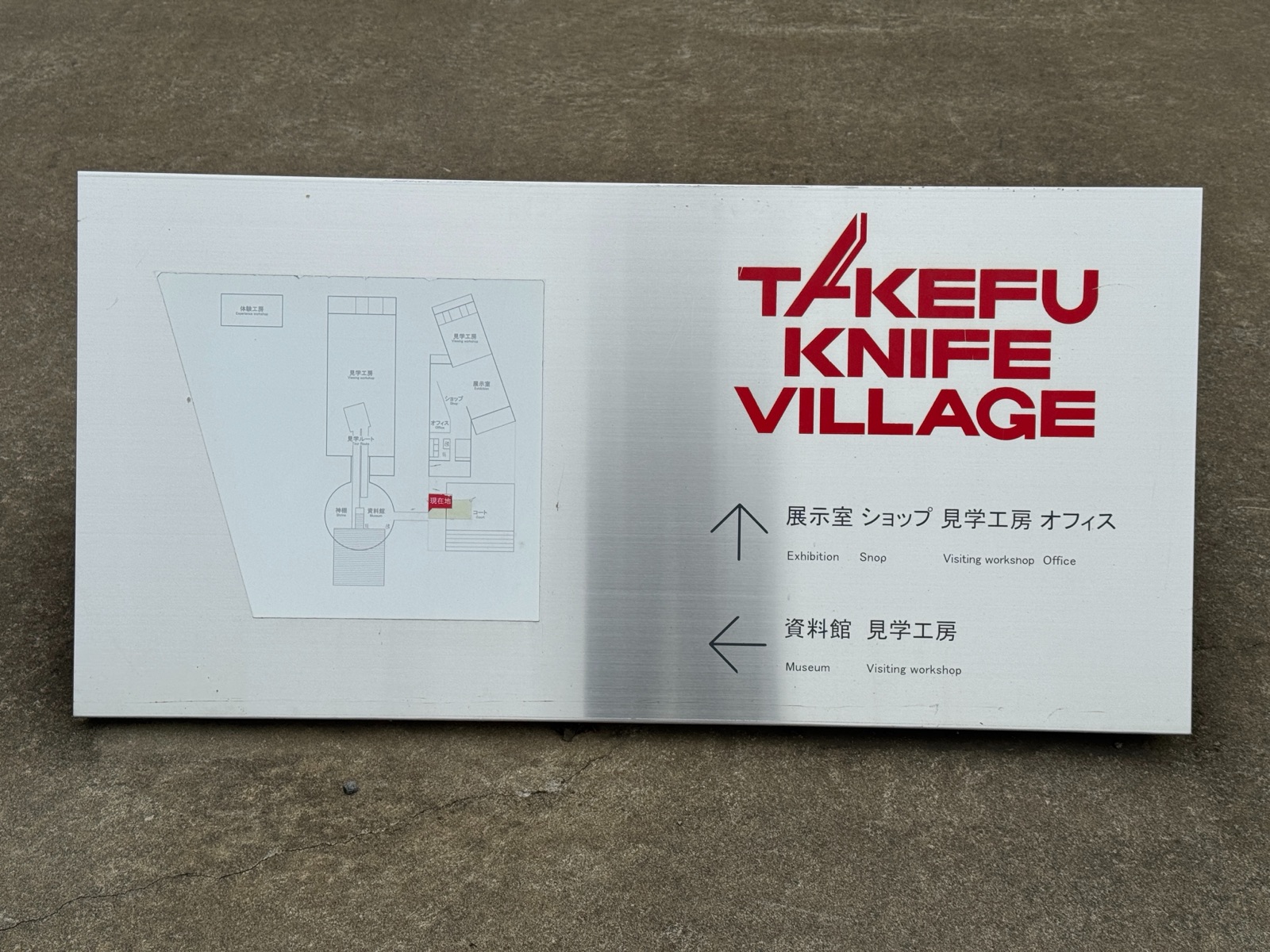
Inside the entrance, a sign points two ways: straight ahead to the exhibition room, shop, viewing workshop and office, and to the left to the museum and another viewing workshop.
The shop: you can buy knives on the spot
Takefu Knife Village is made up of 13 knife companies, and the shop sells knives from each of them, so you can buy one on the spot. It is laid out like a gallery: the knives sit in long glass cases, each with a small label. Besides knives, the shop also sells whetstones, cutting boards and aprons. We saw:
- Western-style gyuto and santoku knives with Damascus patterns
- Traditional Japanese single-bevel knives with wooden handles
- Knives in gift boxes
- Sickles and other farm blades, a reminder that Echizen blacksmiths have long made tools as well as kitchen knives
- Whetstones, cutting boards and knife-care items, plus aprons
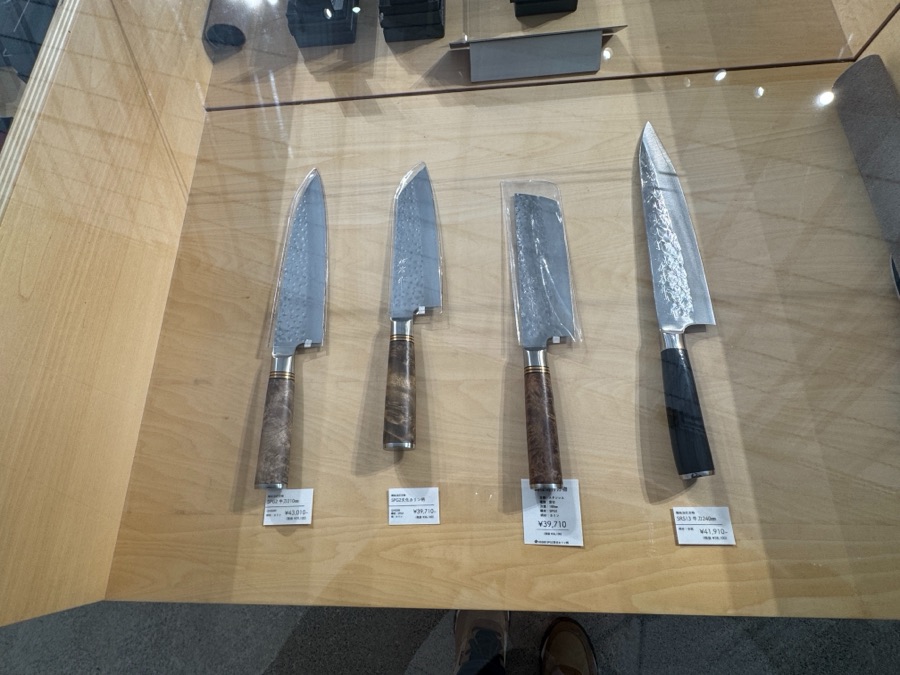
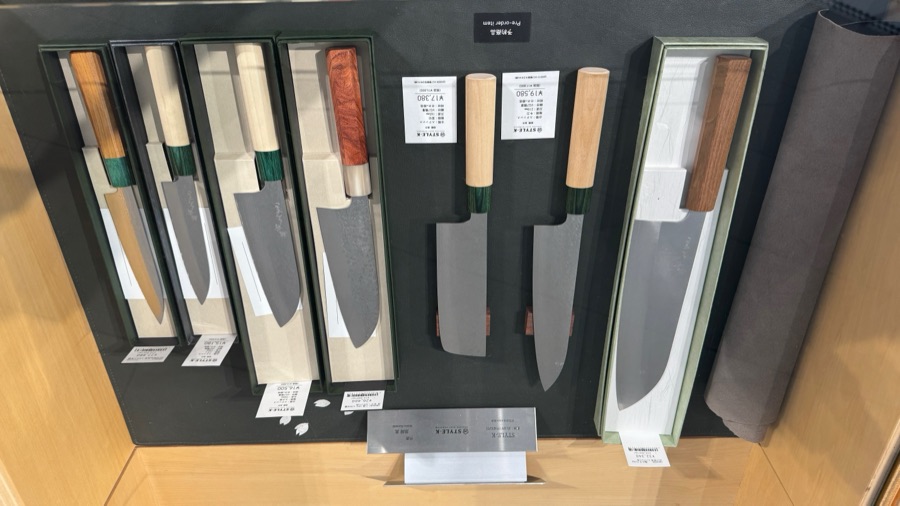
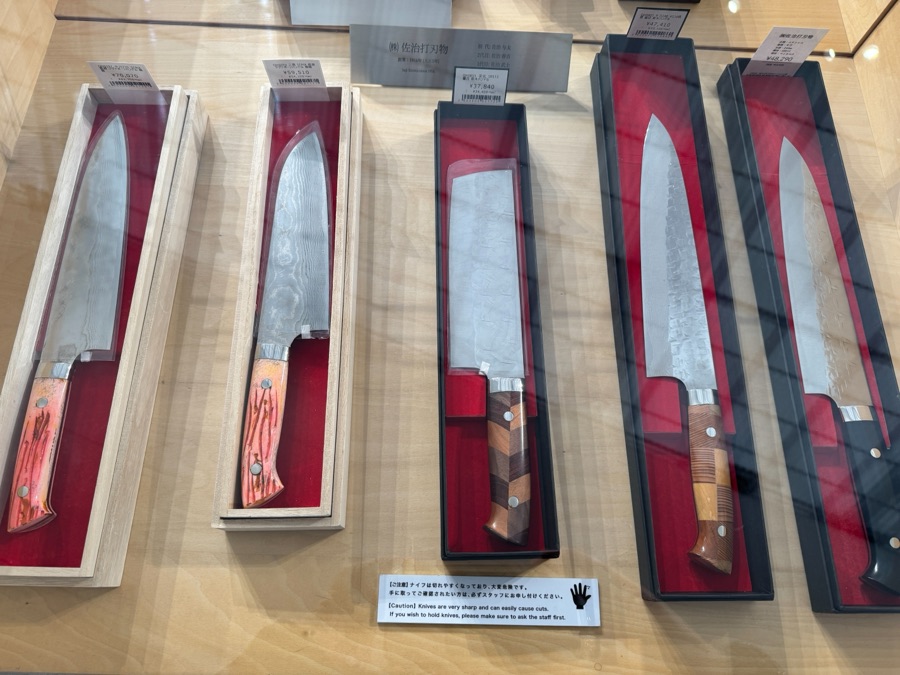
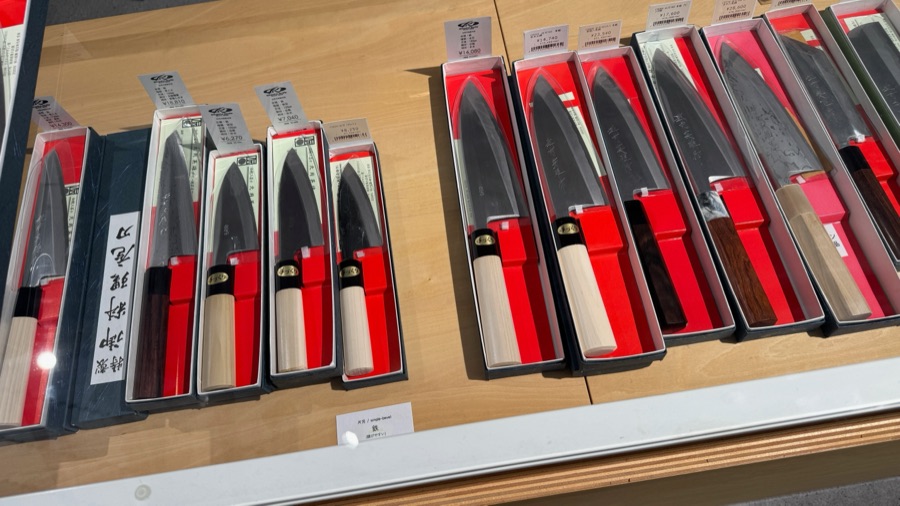
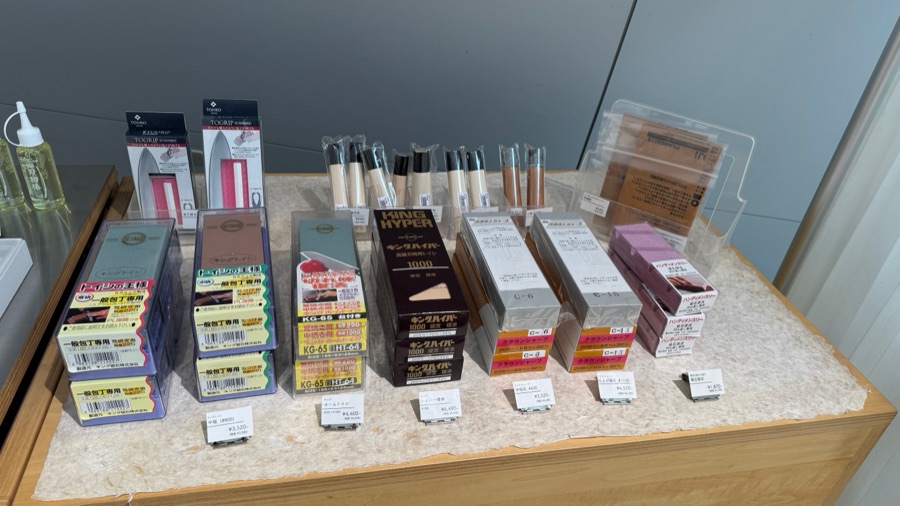
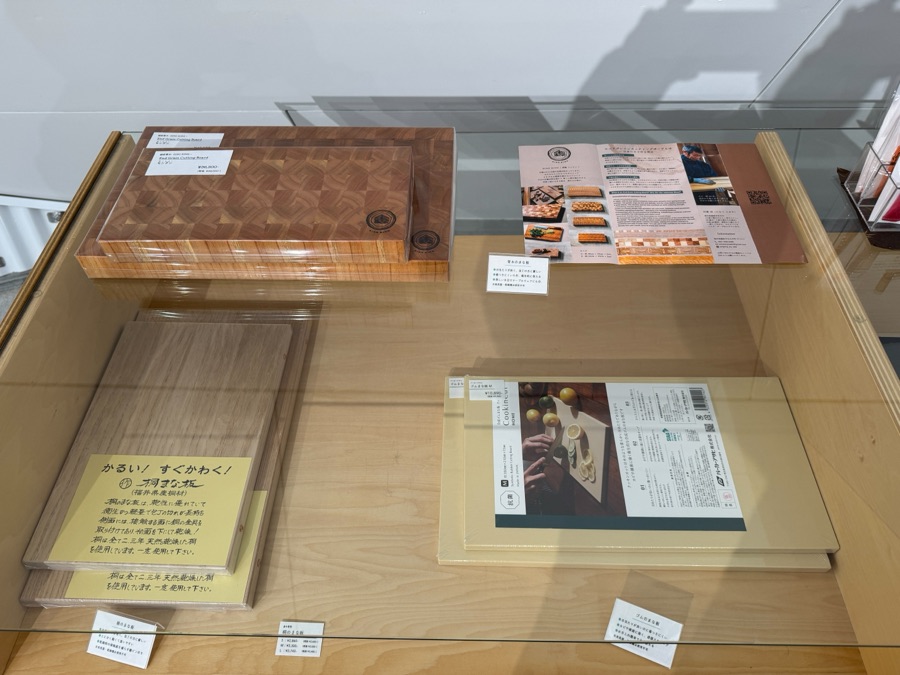
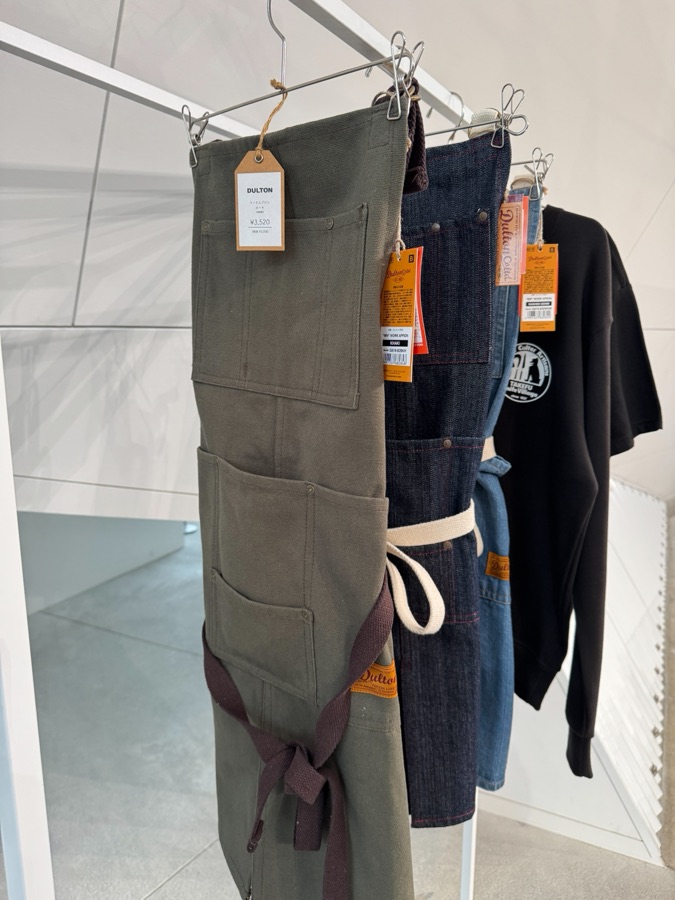
Because many workshops sell here, it is a good place to compare styles and handle shapes side by side before you decide what you want. If you already know what you want and don’t want to carry a knife home through airport security, buying online and having it shipped is the other option.
Buying online instead (Hocho Knife)
Hocho Knife is a Japanese knife shop that ships internationally. We have not used these products ourselves, so we don't rate them. Check prices, stock and shipping on the shop's pages.
Our photo from the Takefu Knife Village shop, not the item sold online
Hocho Knife
The shop carries knives by Echizen makers including Yu Kurosaki, Takeshi Saji and Yoshimi Kato.
See the knife brandsOur photo from the Takefu Knife Village shop, not the item sold online
Our photo from the Takefu Knife Village shop, not the item sold online
Browse by maker at Hocho Knife: Yu Kurosaki, Takeshi Saji, Yoshimi Kato.
The museum and the viewing workshop
This is the part that makes the trip worthwhile.
The museum explains the history of Echizen uchihamono (Echizen forged blades). The craft traces its origin to 1337, when the Kyoto swordsmith Chiyozuru Kuniyasu came to Echizen, and in 1979 it became the first knife-making region in Japan to be designated a national Traditional Craft. On one wall, a kitchen knife and a sickle are each shown at 15 stages, from raw steel to the finished blade, with every stage named in Japanese and romanized Japanese. There is also a display of old forging tools and a large photo of Hatsu-uchi, the first forging of the New Year.
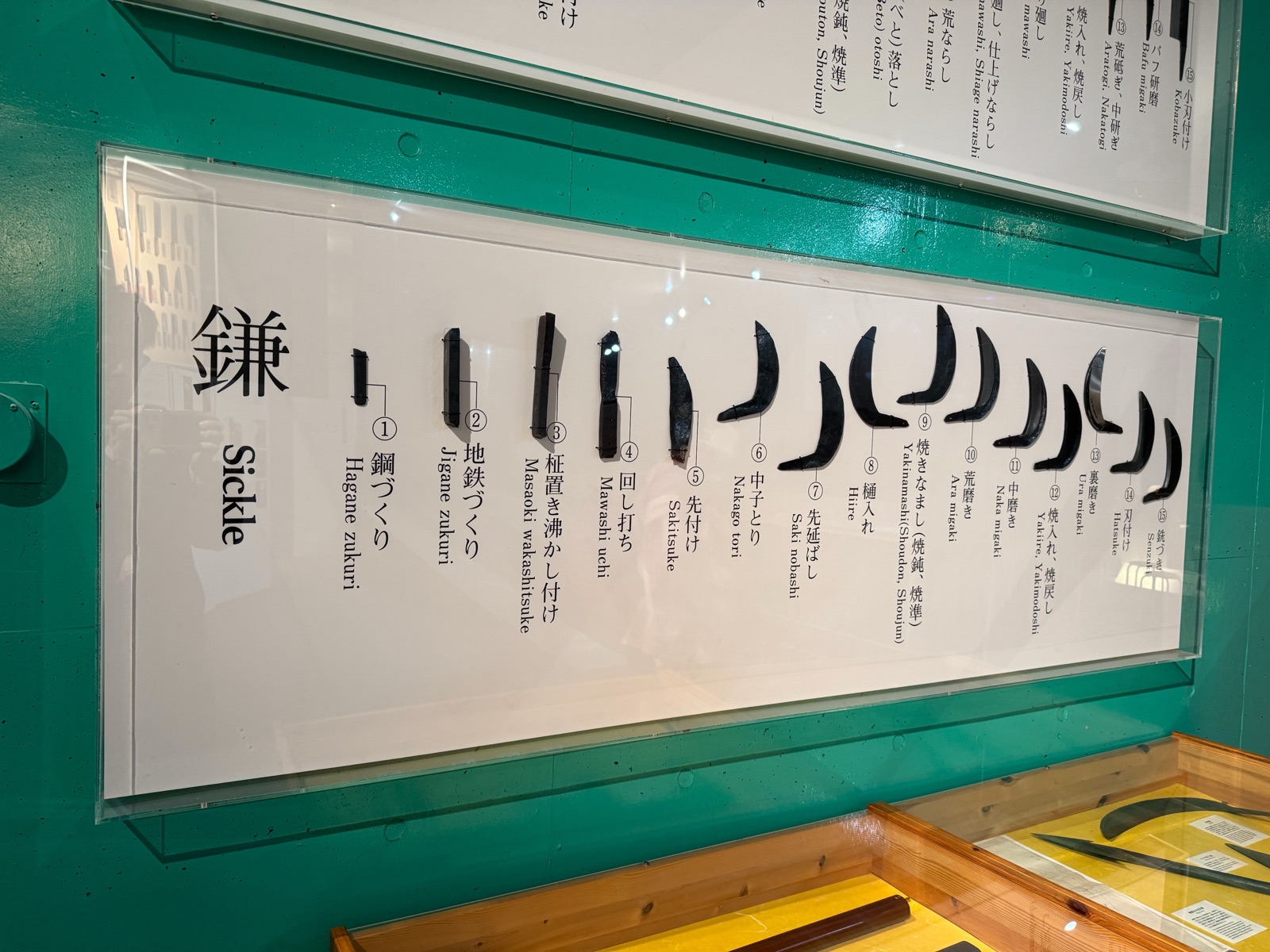
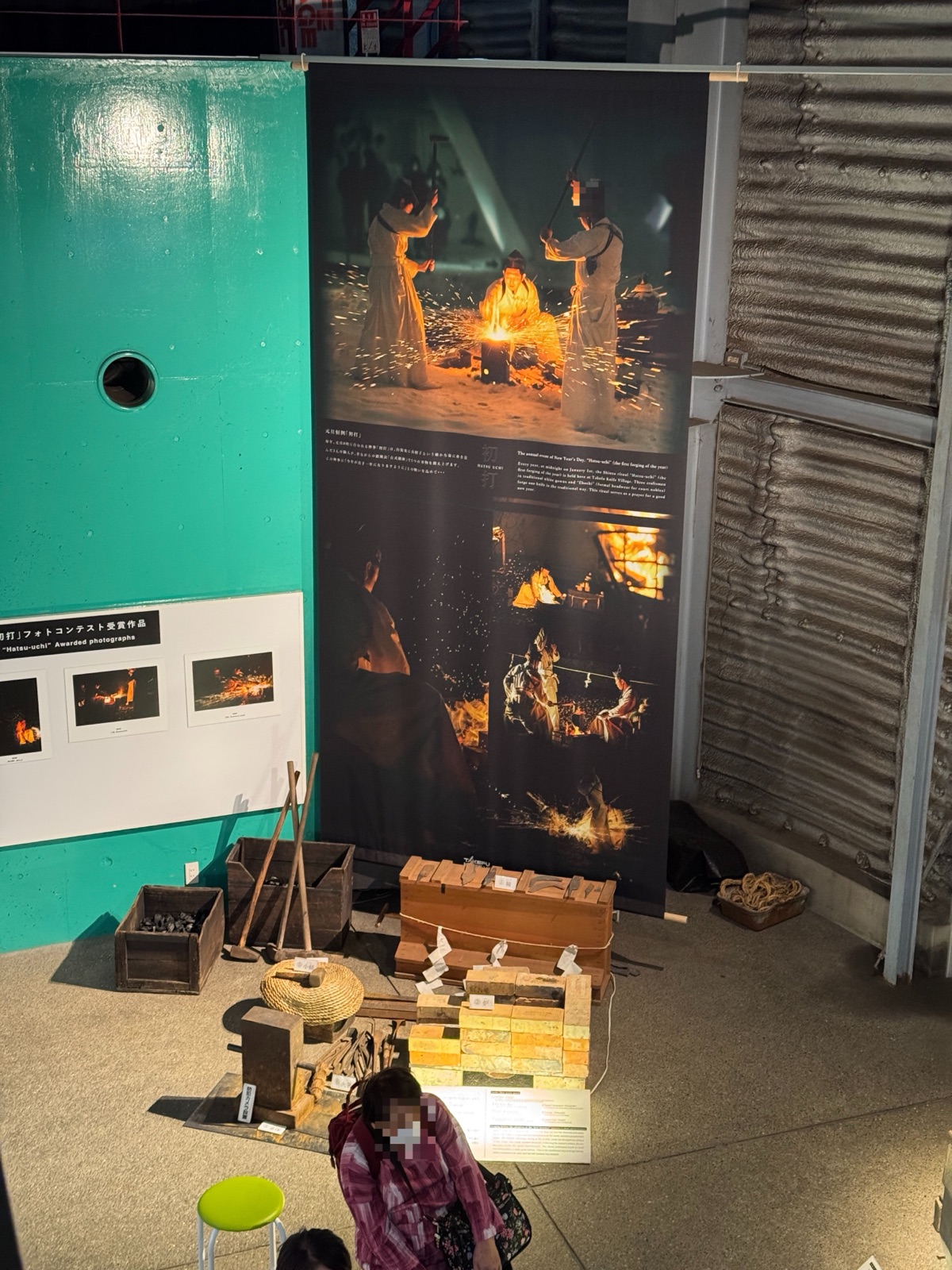
A sign marked “Viewing Workshop — Please feel free to enter” leads to a raised walkway above the shared workshop floor. On the railing, a floor map (in Japanese) marks where each step happens, A to J: forging, pressing and cutting, quenching and tempering, grinding and final sharpening. Several stations have QR codes that open explanations and videos, and the panel on heat treatment also has an English explanation.
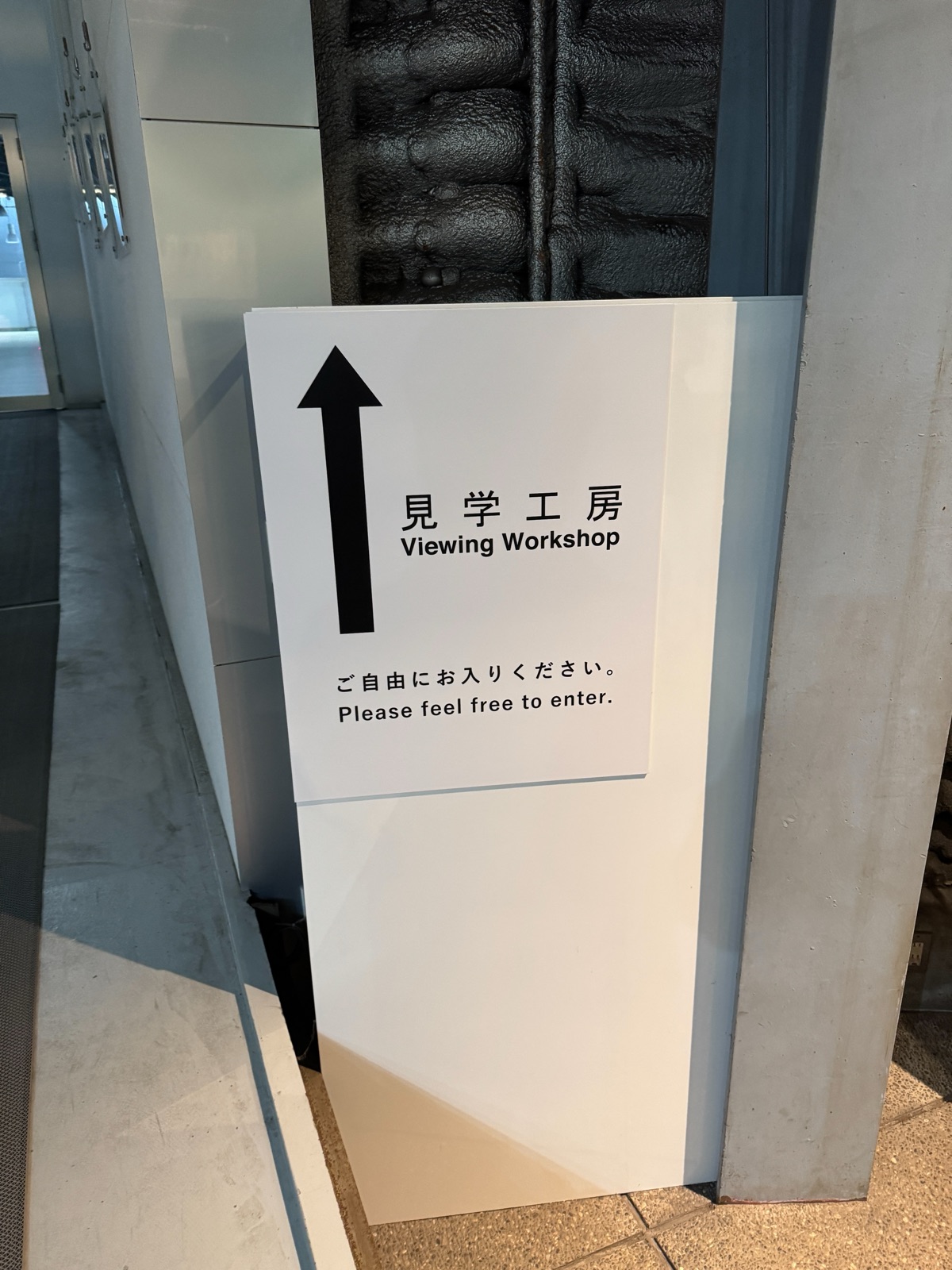
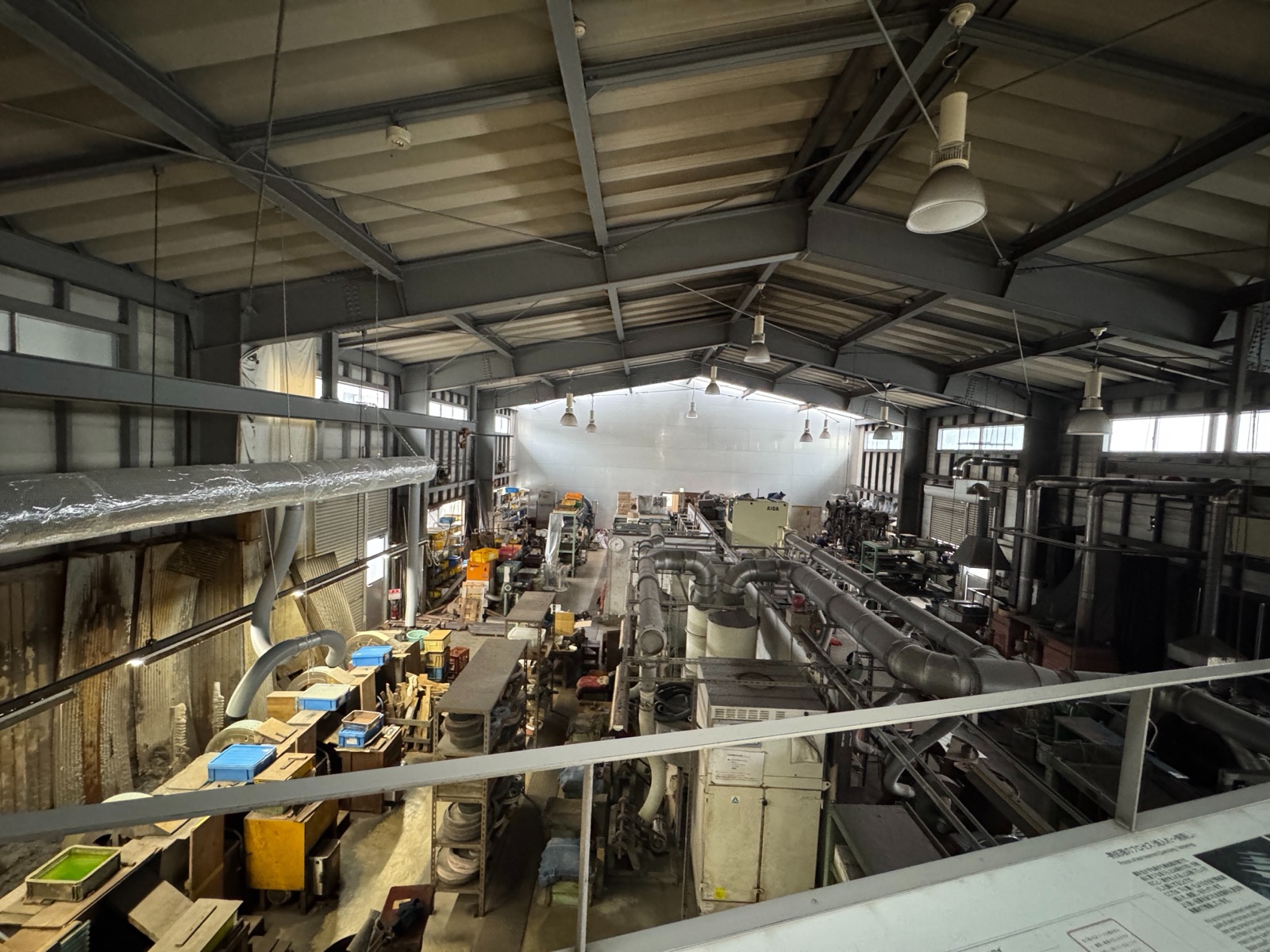
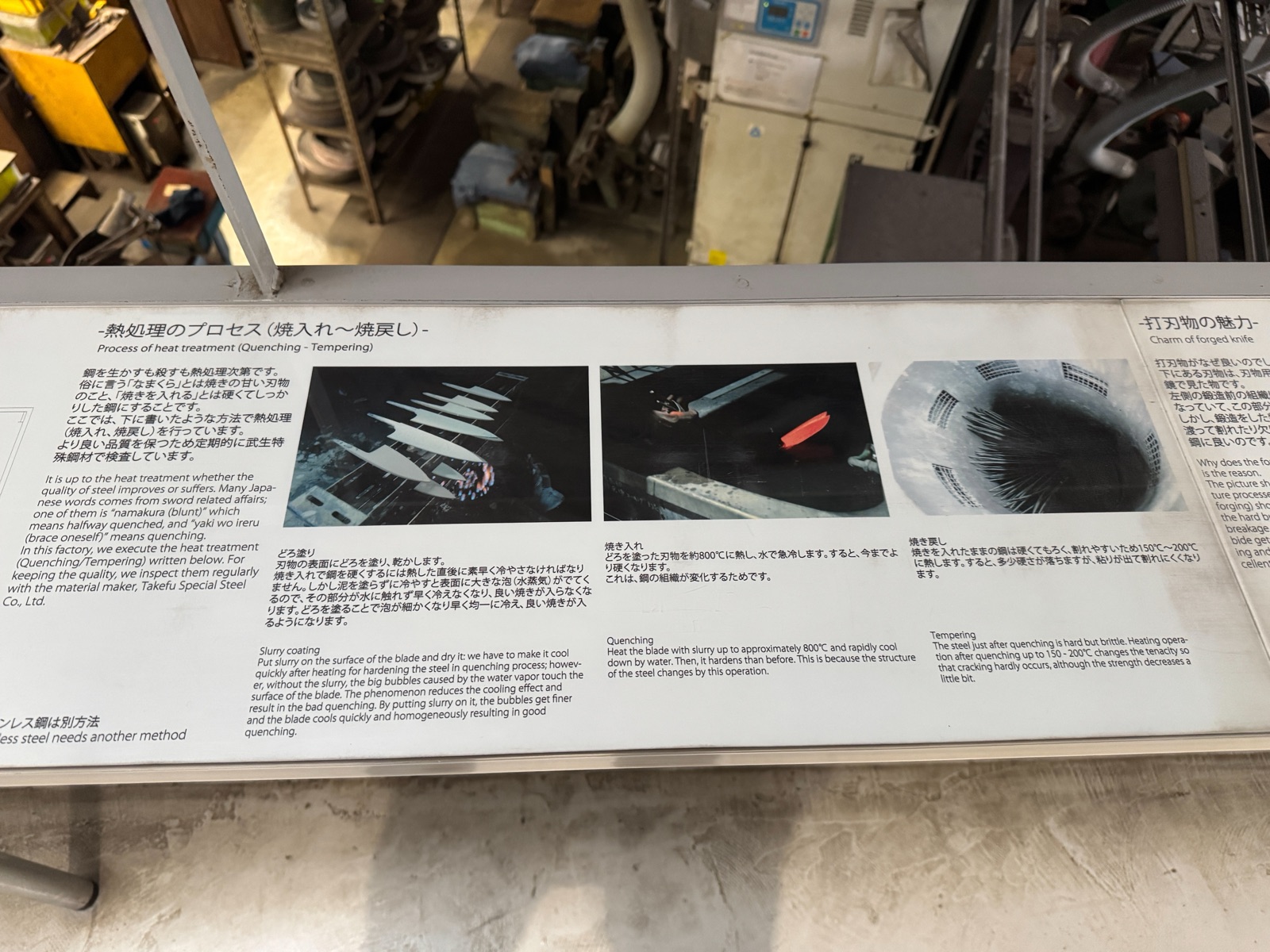
On a Sunday, the workshop was nearly empty: we saw one craftsman working at a grinding wheel. The village’s own leaflet notes that fewer craftsmen work on weekends, so if seeing the forge in action matters to you, go on a weekday.
Practical tips
- Admission: free.
- Hours: 9:00–17:00. Closing days vary, so check the calendar on the official site before you go.
- Parking: free parking on site.
- Weekday vs. weekend: weekdays to see craftsmen working.
- Knife-making workshops: details and booking are on the official site (the village’s leaflet links to them by QR code and says you can ask questions in English). Group workshop bookings are paused for now, so check the current status.
- Sharpening service: the village also sharpens customers’ knives, scissors and other blades. It takes about 3–5 days, so it suits locals more than day visitors.
- Photos: ask the staff before photographing products or people working.
How to get to Takefu Knife Village
The nearest Shinkansen stop is Echizen-Takefu Station. A brochure from Echizen Chiyozuru-no-Yakata, the local knife hall, gives the drive as about 10 minutes from the station (and about 10 minutes from the Takefu interchange on the Hokuriku Expressway if you have a car).
Echizen-Takefu Station
Echizen-Takefu Station opened in 2024 as a stop on the Hokuriku Shinkansen extension. It is a modern, compact station. There is a convenience store (7-Eleven) in the station concourse, and the exits are clearly signed in Japanese, English and Korean: South, West and East. For taxis, buses and the tourist information center, follow the signs to the West Exit.

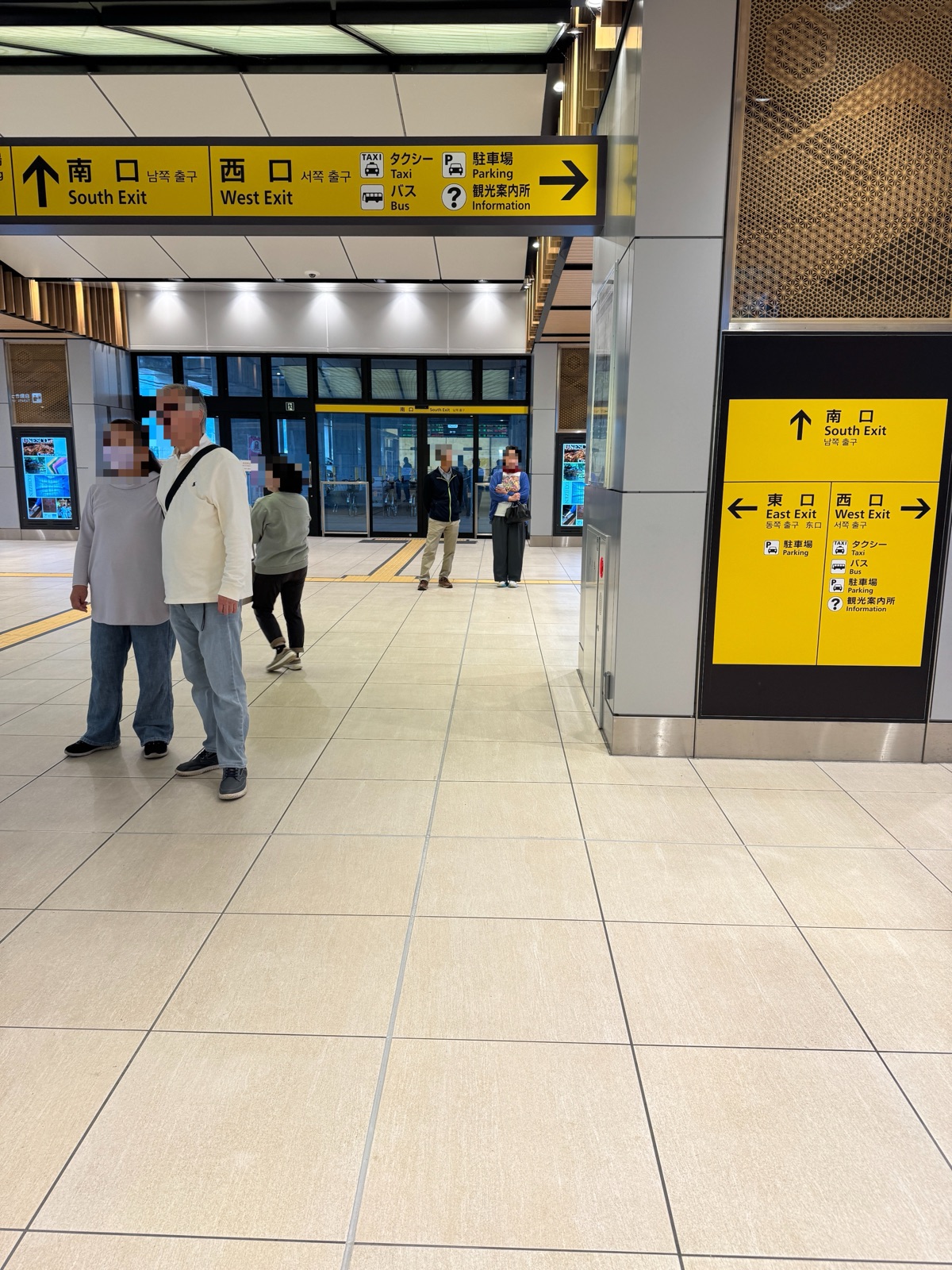
Outside the West Exit, a map board shows where everything is: bus stops and the main taxi stand to one side, a courtesy-bus stop and another taxi stand to the other, and the coin lockers, rental cars and the booked-taxi stand back toward the East Exit side.
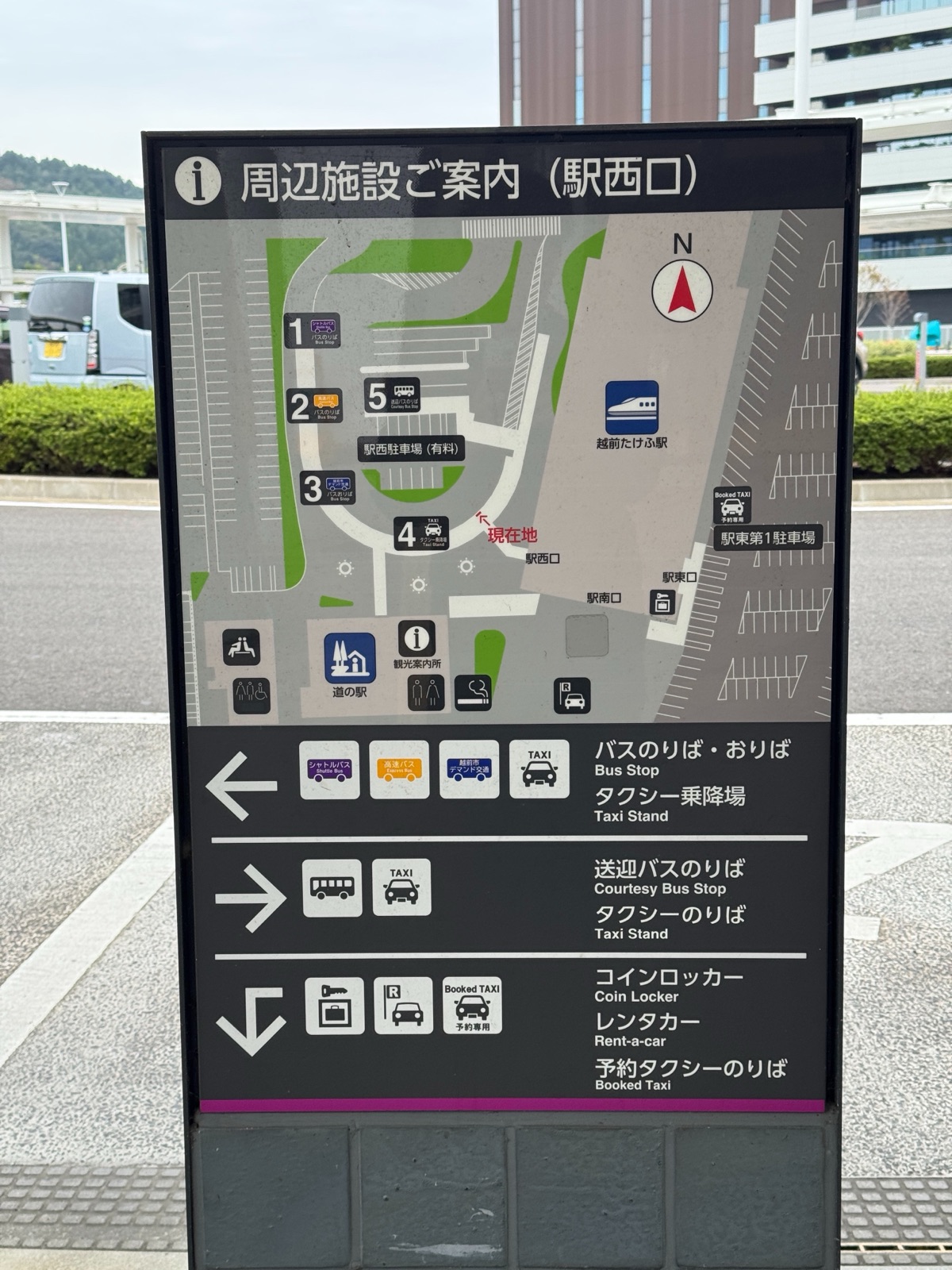
Taxis: don’t assume one will be waiting
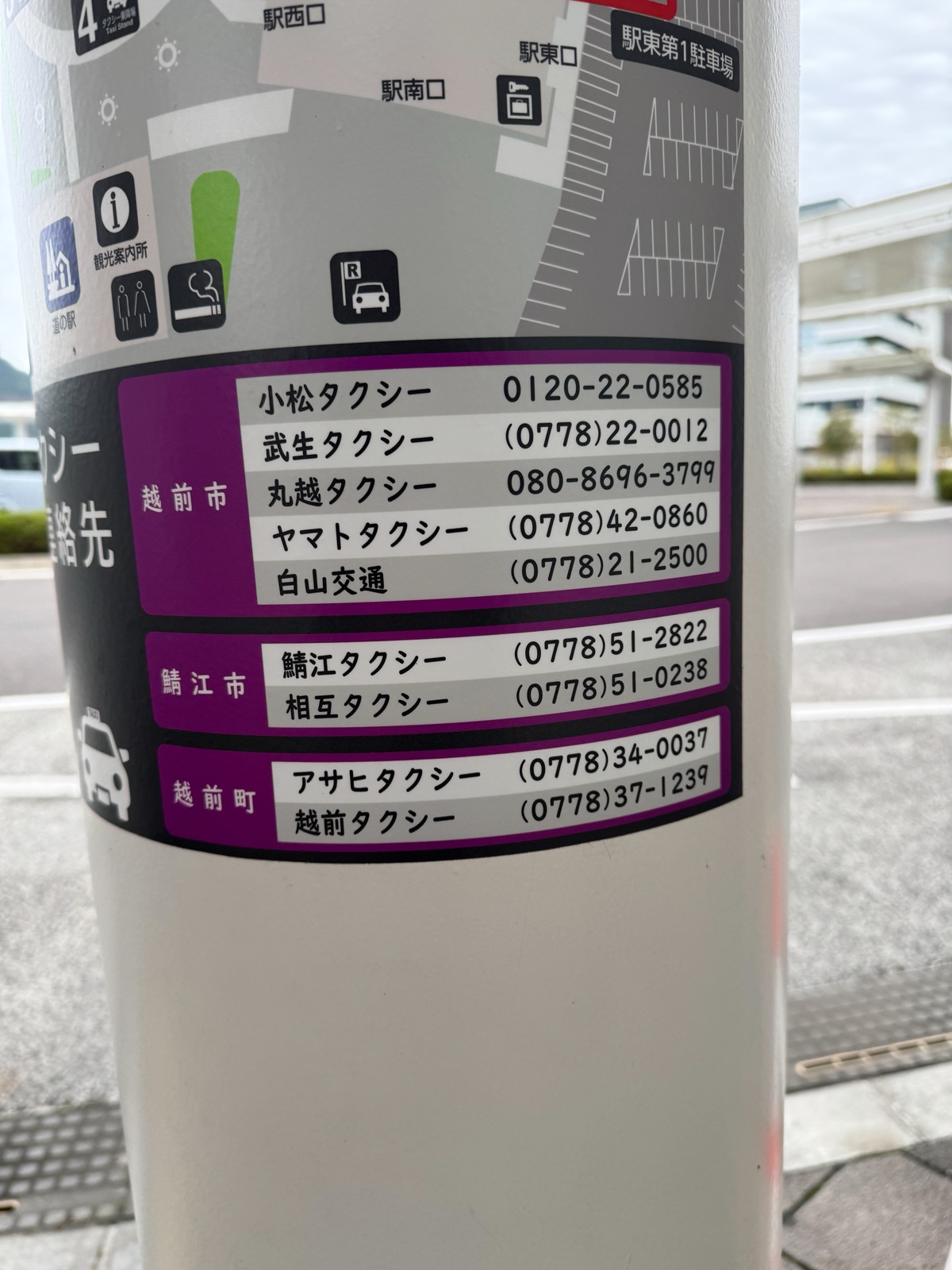
Taxis are not always waiting at this station, so booking one in advance is the safer choice. The posts at the taxi stand list the phone numbers of the taxi companies in Echizen City and the neighboring towns, but when we were there we had no way of knowing how quickly a car would come if we called. If you do not speak Japanese, ask the staff at the tourist information center to call for you.
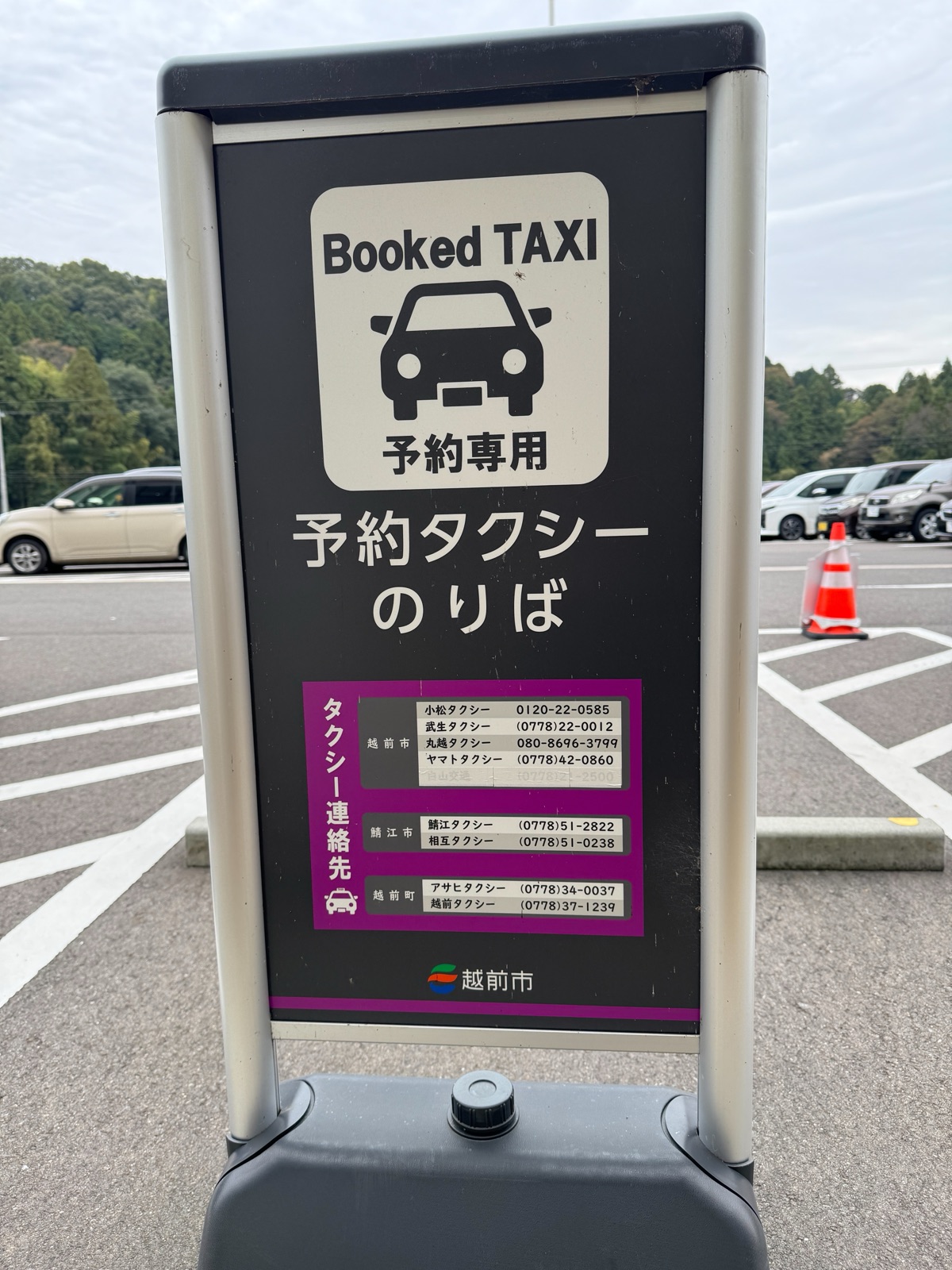
There is also a booked-taxi stand, which is for taxis you have already reserved, so don’t wait there hoping to flag one down. It is on the East Exit side of the station, as are the coin lockers. If you have luggage to leave, head that way first.
Before you go
- Staying connected: you may need to call a taxi from a station with few cars waiting, so a working mobile connection helps.
Staying connected in Japan: eSIM
An eSIM lets you use mobile data in Japan without a local SIM card, if your phone supports eSIM. We have not used these services ourselves, so we don't rate them. Check plans and prices on each site.
Where to stay
If you would rather stay nearby, or visit the knife village as a day trip from a bigger base, these are the practical options along the line:
- Around Takefu: several hotels are near Takefu Station on the Hapi-Line Fukui.
- Tsuruga: the next Shinkansen stop to the south, and the station where you change between the Shinkansen and limited express trains from Kyoto and Osaka.
- Fukui City: the next Shinkansen stop to the north, and the prefectural capital.
- Kanazawa: further north on the same Shinkansen line, and a popular base for the Hokuriku region.
- Kyoto: take a limited express to Tsuruga and change to the Shinkansen there. It is a longer trip, but it works if Kyoto is your base.
Two more places nearby
Both are a short drive from Echizen-Takefu Station, so they combine easily with the knife village in a day. (Details below are from each facility’s brochure, picked up in November 2026.)
Echizen Washi Village
Echizen is also one of Japan’s best-known papermaking areas, and the Washi Village gathers several stops in one district:
- Paper and Culture Museum (紙の文化博物館): around 360 examples of washi from the area, plus historical materials and changing exhibitions.
- Udatsu Paper & Craft Museum (卯立の工芸館): a papermaking house from the mid-Edo period, moved here and restored. Craftsmen use traditional tools to show each step, from cleaning the fiber to forming and drying the sheets.
- Papyrus House (パピルス館): a hands-on papermaking experience with staff help, suitable for small children through adults (about 20 minutes and up).
- Okamoto and Otaki shrines (岡太神社・大瀧神社): Okamoto Shrine honors Kawakami Gozen, the goddess said to have taught papermaking to the village. The lower shrine, shared by the two shrines, is a national Important Cultural Property.
Getting there: about 10 minutes by car from Echizen-Takefu Station.
Murasaki Yukari no Yakata (Murasaki Shikibu Museum of Echizen)
Murasaki Shikibu, the author of The Tale of Genji, spent a little over a year in Echizen’s provincial capital as a young woman — the only time in her life she lived away from the capital. This small museum tells that story with exhibits and video, and also has a tourist information and shop corner.
- Admission: free.
- Hours: 9:00–17:00. Closed on Mondays (the next day if Monday is a holiday) and over the New Year holidays.
- Note: no flash photography, tripods or selfie sticks inside.
- Getting there: about 15 minutes by car from Echizen-Takefu Station, or about 30 minutes on foot from Takefu Station on the Hapi-Line Fukui.
Is it worth the trip?
If you are interested in Japanese knives, yes. You can compare work from many local makers in one room and see how a blade is made from start to finish. Without a strong interest in knives, it works best combined with the washi village and the Murasaki Shikibu museum above rather than as a stand-alone trip.